The year 2025 has been a landmark for Indian science, characterized by "firsts" in space, indigenous computing, and breakthroughs in life-saving genetics. Here are the top 10 science and technology stories from India in 2025:
1. ISRO successfully executes SpaDeX docking experiment; India joins elite club of nations
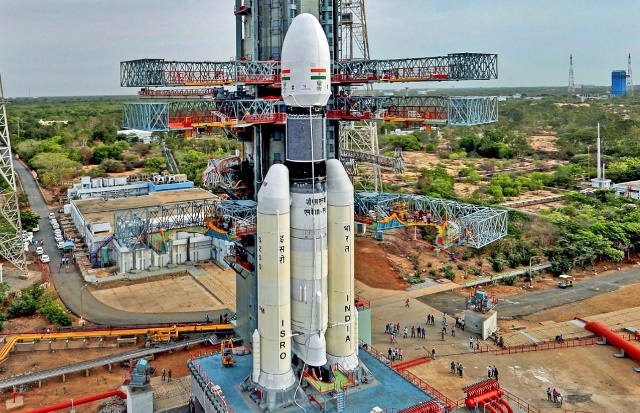
In January 2025, ISRO successfully executed the Space Docking Experiment (SPADEX). This mission involved two satellites autonomously docking in orbit, making India the fourth nation to master this technology. This is the foundational technology required for the upcoming Indian Space Station (Bharatiya Antariksha Station) and the Chandrayaan-4 sample return mission. The mission, called SpaDeX, blasted off from Sriharikota launch pad in southern India on 30 December. The two spacecraft, launched on a single rocket, separated in space. The docking process, initially scheduled for 7 January, was rescheduled a number of times. The spacecraft are also carrying scientific instruments and cameras which will then be deployed. Over the next two years, they will measure radiation in space and monitor natural resources on Earth. Isro, known for economising its missions, is also using a part of the rocket that carried SpaDeX to space - which in normal circumstances would become space debris - to conduct some important experiments in orbit for three months. Poem – short for PS4-Orbital Experiment Module - is carrying 24 payloads and has already carried out two successful experiments.
2. DHRUV64: India’s First Indigenous 64-bit Microprocessor
DHRUV64 is India's first indigenous 64-bit, 1.0 GHz dual-core microprocessor, developed by the Centre for Development of Advanced Computing (C-DAC) under the Microprocessor Development Programme. Based on the open-source RISC-V architecture, it is designed for secure, sovereign, and efficient computing in embedded systems, defense, and industrial applications.
3. CRISPR Gene Therapy for Sickle Cell Disease
Indian scientists at CSIR-IGIB developed the country’s first indigenous CRISPR-based gene therapy specifically for sickle cell disease. This "molecular scissor" technology was successfully transferred to industry for clinical deployment, offering a potential cure for a disease that disproportionately affects India’s tribal populations.
4. World’s First Pink Bollworm-Resistant GM Cotton
CSIR-NBRI developed the world's first genetically modified (GM) cotton that is totally resistant to the Pink Bollworm (PBW), a devastating pest affecting cotton crop in India, Africa and Asia. There is a pressing need to enhance cotton productivity while reducing dependency on chemical pesticides which have environmental and economic drawbacks. Adopting advanced biotechnological interventions offers a sustainable and targeted approach to crop protection. This technology aligns with national goals of improving agricultural resilience, ensuring farmer income, and promoting environmentally responsible farming practices.
5. The "Alaknanda Galaxy" Discovery
Indian astronomers Rashi Jain and Yogesh Wadadekar made headlines globally by discovering a stunning spiral galaxy, named the Aleksandra Galaxy, using NASA’s James Webb Space Telescope. Their work has provided new insights into how spiral structures formed in the early universe.
6. Astronaut becomes first Indian to set foot on ISS
Astronaut Shubhanshu Shukla has created history by becoming the first Indian ever to set foot on the International Space Station (ISS). A live broadcast showed the Axiom-4 (Ax-4) mission docking with the orbiting laboratory and its four-member crew crossing over to the ISS. Led by former Nasa veteran Peggy Whitson and piloted by Group Captain Shukla, Ax-4 lifted off on Wednesday. The crew, including Slawosz Uznanski-Wisniewski from Poland and Tibor Kapu from Hungary, will spend two weeks on the ISS. Captain Shukla is only the second Indian to travel to space. His trip comes 41 years after cosmonaut Rakesh Sharma became the first Indian to fly aboard a Russian Soyuz in 1984.
7. India's Genome-Edited Rice Revolution: Pioneering Sustainable Agriculture
India has officially approved and released two genome-edited rice varieties, DRR Rice 100 (Kamala) and Pusa DST Rice 1, developed using the CRISPR-Cas9 gene editing technology. This marks a significant advancement in Indian agriculture, promising increased yields, climate resilience, and water conservation. These varieties are distinct from traditional genetically modified organisms (GMOs) as they are developed without introducing foreign DNA, making them a form of precision breeding. Pusa Rice DST1, from IARI, has been engineered for enhanced drought and salt tolerance. By disabling a gene that limits stress response, scientists reduced stomatal density and water use while improving tillering, salt resilience, and grain yield. It showed significantly better performance under stress compared to the MTU1010 variety.
8. The Genome India Project: A Pioneering Step Toward Personalized Medicine and Genetic Research in India
The field of genomics has evolved rapidly in the last few decades, reshaping how we understand human health, diseases, and evolution. With technological advancements making genome sequencing more accessible, countries around the world are undertaking large-scale genomic research projects to explore genetic diversity, promote personalized medicine, and address the rising global health challenges. One such ambitious initiative is the Genome India Project, an effort to map the genetic makeup of the Indian population. Launched in 2020 by the Department of Biotechnology (DBT) under India’s Ministry of Science and Technology, this project aims to sequence the genomes of around 10,000 Indians from different regions, ethnicities, and backgrounds. The goal is to create a comprehensive genetic map that can provide deeper insights into India's genetic diversity, diseases prevalent in the population, and the overall health challenges faced by its people. The outcomes of this project could drive groundbreaking advancements in healthcare, genomics, and biotechnology in India, paving the way for precision medicine and revolutionizing public health strategies.
9.The "Indian Fishing Spider" & Biodiversity Records
2025 saw the discovery of over 16,000 new species in India. The standout was Dolomedes indicus, the first confirmed "fishing spider" found in India (Kerala). These semi-aquatic spiders are capable of "skating" on water to hunt small fish, highlighting the incredible, unexplored biodiversity of the Western Ghats.
10. Can yeast survive on Mars?
In a new study, researchers in the Department of Biochemistry (BC), Indian Institute of Science (IISc) and collaborators at the Physical Research Laboratory (PRL), Ahmedabad have found that the yeast has the resilience to withstand harsh conditions found in the Martian environment. The team exposed yeast cells to high-intensity shock waves – similar to those produced by meteorite impacts on Mars – and perchlorate salts, which are toxic chemicals found in Martian soil. Using a High-Intensity Shock Tube for Astrochemistry (HISTA) in Bhalamurugan Sivaraman’s lab at PRL, they simulated shock waves reaching Mach 5.6 intensity. The team also treated yeast cells with 100 mM sodium perchlorate either in isolation or in combination with the shockwaves. The findings underscore how baker’s yeast could serve as an excellent model for India’s efforts in astrobiology research. Understanding how such cells reorganise their RNA and proteins under mechanical and chemical stress can provide insights into the survival of lifeforms beyond Earth. Crucially, such insights could also guide the design of stress-resilient extraterrestrial biological systems.