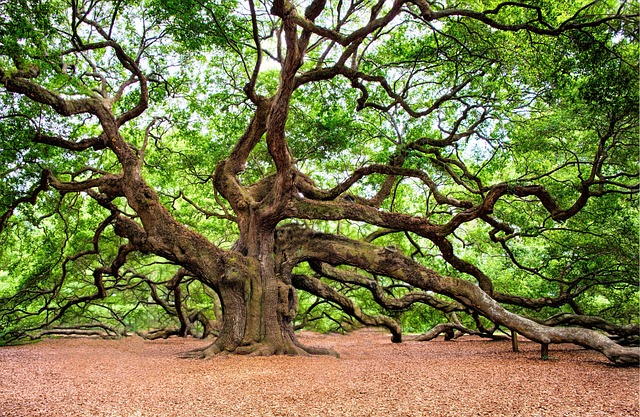
Global raising concern over for clean air due to progression of population, industrialization, urbanization, vehicular emission are pushed air pollution and atmospheric carbon dioxide to alarming level. To compact this global issue planting natural trees is the primary solution, however slow growth rate and space constrains limit their impact.
This has lead an alternate bioinspired ecofriendly and integrating electronics and biological sciences in more efficient itinerary to mimic nature ability to absorb atmospheric carbon dioxide to pure air. Though artificial trees are not replace real forest ecosystem, they represent promising global substitute to combat climate change and air pollution. In this article we will explore how artificial tree could be used as an eco-friendly approach to compact global pollution, the challenges involved and it future potential contribution to overcome air pollution.
Artificial Trees
An artificial tress mimic the functionality of natural tree attributes with bio-inspired engineered systems, specifically to capture atmospheric carbon dioxide (CO2) and intermingle with ambient air. Artificial trees are fabricated with advanced catalytic surfaces, chemical adsorbents and advanced materials or hybrid of bio components to facilitate limited and enhanced carbon capture results air remediation process. These systems are essential in an environment where natural flora and fauna are not sufficient to solve local air quality and management of atmospheric carbon level.
The function of artificial tress by exposing of high surface area to ambient air, permit specific adsorption or absorption of CO2. Based on the strategic configurations 1. Direct Air Capture (DAC) systems, 2. Artificial photosynthesis systems, 3. Microalgae-based bio-reactors, 4. Urban air-cleaning installations. Were the captured carbons are concentrated for carbon sequestration, result reduction of greenhouse gas or transformed in to fuels, chemicals or mineralized carbonates of value added products. In some types of artificial trees coupled with photocatalytic or electrochemical elements that enable conversion of carbon reaction under electrical energy input or solar energy input. Hybrid of bio based artificial trees association of photosynthetic microorganisms or microalgae with engineered photobioreactor structures helps oxygen generation along biological carbon fixation.
The optimized functionality of artificial tree depend on interaction between air-surface material, exposure of light and efficiency of mass transfer. An inspiration from natural photosynthesis of leaf mechanism and plant branching geometries, new generation artificial tree system may further develops with advanced embedded sensors, control electronics and data communication modules for real time environmental adoptive operation and monitoring under different high emission environmental conditions.
Functionality of Artificial Tree
The most artificial tree working principle follow a simple conversion process
Air flows in → CO? is captured → CO? is stored or converted
|
Module / Technology |
Working Mechanism |
Input |
Output |
Functional Analogy |
|
CO? Capture Using Advanced Materials |
CO? in air adhere the surface of special “leaf” materials. |
Ambient air (CO?) |
CO?-loaded sorbent material |
Artificial leaves capturing CO? |
|
Regeneration and CO? Collection |
Heating or changing pressure releases the stored CO?. |
CO?-saturated sorbent + energy (heat/pressure) |
Concentrated CO? stream for storage or utilization |
Artificial respiration / CO? harvesting unit |
|
Artificial Photosynthesis |
Sunlight drives a reaction that turns CO? and water into fuel. |
CO? + H?O + sunlight |
Methanol, hydrogen, or syngas |
Synthetic leaf performing fuel-producing photosynthesis |
|
Bio-hybrid Systems with Microalgae |
Algae use sunlight to consume CO? and produce oxygen. |
CO? + sunlight + nutrients |
Biomass + oxygen |
Living leaves with enhanced CO? uptake |
Need of Artificial Trees
Artificial trees are being explored because:
- Limited urban space: Cities lack adequate green cover to absorb increasing emissions.
- Fast CO? capture: Some artificial trees can capture CO? at high rate compared to natural trees of similar area.
- Mitigation for Raising CO2: Reduce the net carbon load in the atmosphere
- Target deployment: They can be installed near highways, factories, power plants, or crowded urban centers.
- Carbon utilization: Captured CO? can act as raw source for conversion of useful products, improve a nation circular carbon economy.
- Energy Transition and Renewable Fuel Production: Generation of renewable fuels H2 or Methanol using solar energy, which lay path for carbon-neutral energy carries and substitute for fossil fuel also link climate protection with sustainable energy generation.
- Novel platform for Research & Technology: Artificial tree act as platform for experimenting advanced catalysis, materials science, bio-hybrid system and associated environmental technology. Adaptation of pilot scale study of artificial trees promote translational research in science and engineering.
Research and Development status in Global-India
Globally artificial tree implemented in the configuration of Direct Air Capture system (DAC) and installed all around the world but in medium to small scale, which is not compromise the global CO2 emissions. To resolve the global mitigation of CO2 emissions and purification of air requires innovation diversity in prototype and bio-hybrid system developments. In india artificial tree research is evolving actively but in budding stages, classical sciences on CO2 capture, catalysis, conversion of CO2 to value added products are still in academic engagement. Pilot scale deployment of prototypes give research in visible, real world context, but fully developed artificial tree of direct air capture facility are yet to arise in commercial level in India. Periodic scientific effort between research, industry and govt policy will tune up these in to effective environmental technologies.
Relevance for India
In india artificial trees are at presently assessed as green experimental technology rather than practical urban infrastructure. These trees are not substitute for the natural forest but considerable environmental convalescence technology that supplement exploitation of renewable energy, afforestation and emission control policies. In Indian society public awareness about artificial tree is limited, with pilot installation will attract curiosity with skepticism about cost, real world impact. Besides, strong cultural and ecological value of natural trees, artificial trees are commonly accepted as supplementary tool against highly polluted atmosphere. The wider social relevance and acceptance depends on strong evidence of environmental benefits.
Challenges and Limitations
In spite of their environmental benefits these artificial trees face several challenges: All these challenges highlighted and need to be addressed by continued research and responsible deployment strategies.
- High cost of advanced materials and system deployment
- Energy requirements for CO? regeneration and processing
- Long-term durability in harsh outdoor environments
- Scalability to city-wide or national levels
- Lifecycle environmental impact of manufacturing materials
The Road Ahead: A Complement to Nature
Artificial trees symbolize rousing leading bio-inspired eco-friendly engineering strategy. They platform how technology can learn from nature to resolve emerging environmental problems. However, the future of sustainable living does not lie in choosing between technology and nature it lies in harmonizing both. Caring forests, intensifying green cover, decreasing pollution at the source, and embracing artificial trees as helpful set-up can together form a more strong reaction to environmental-climate change and air pollution.
Conclusion
As humanity confronts the truths of environmental change, revolutions like artificial trees prompt us that science and engineering can play a fruitful transformation in environmental guardianship. While no device can fully exchange the life-giving functions of a natural tree, artificial trees offer a powerful symbol of how human inventiveness, when guided by ecological wisdom, can help the planet breathe a little easier.

Figure .1 Natural vs Artificial Tree