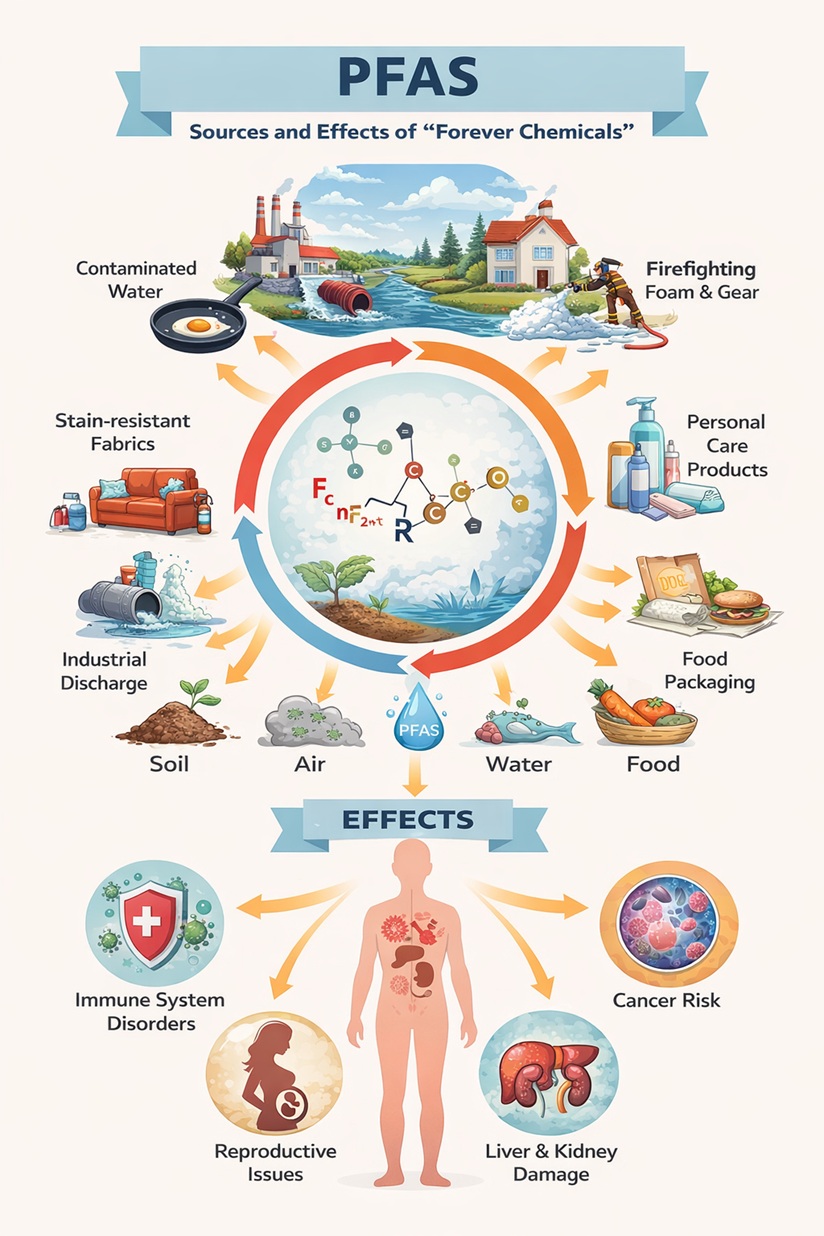
Per- and polyfluoroalkyl substances (PFAS), a group of over 10,000 synthetic chemicals known for their extreme persistence in the environment and the human body, have become one of the most challenging pollution issues of our times. Nicknamed “forever chemicals” due to their resistance to natural breakdown, PFAS are found in products ranging from non-stick cookware and waterproof fabrics to firefighting foams and industrial coatings. Their persistence means they can travel far from their source, contaminate water supplies, and accumulate in the food chain with significant implications for human health and ecosystems.
Europe Leads on Regulatory Action
While PFAS regulation in the United States remains complex and, in some areas, uncertain, Europe has been steadily advancing comprehensive policies to contain PFAS threats. In early 2026, the European Commission implemented updated PFAS regulations under the recast Drinking Water Directive (DWD), introducing systematic monitoring of PFAS levels across EU member states. These measures signal a shift toward stronger enforcement and transparency on contaminant reporting across Europe.
Complementing EU-wide action, individual countries are moving ahead with national policies. For instance, France adopted one of the most ambitious PFAS laws in the world, banning PFAS in several consumer product categories and imposing fees on industrial discharges into water to fund remediation efforts part of implementing the broader European Green Deal ethos of elimination rather than containment.
Europe’s proactive stance contrasts with ongoing debates in other regions, where industry stakeholders and regulatory bodies are still negotiating the scope and pace of restrictions. Some industry groups argue that certain PFAS subsets lack clear evidence of harm, even as scientific consensus highlights the risks of widespread exposure.
Historic Legal Precedent in Italy
Beyond regulatory action, judicial systems are beginning to hold corporations and executives accountable for environmental harm linked to PFAS. In a landmark ruling in Italy’s Veneto region, a criminal court sentenced 11 former executives of the chemical firm Miteni to prison terms totaling 141 years for contaminating groundwater and soil with PFAS affecting hundreds of thousands of residents. This ruling has resonated globally, underscoring not only the health risks of PFAS exposure linked to cancers, immune system disruption, and hormonal effects but also the legal and financial consequences for environmental negligence.
A Global Challenge with Local Impacts
Despite progress in parts of Europe, other regions face ongoing uncertainty. In the United States, for example, regulatory limits on PFAS in drinking water have been established for a subset of chemicals, but broader policy implementation and enforcement remain contested, and industry litigation is expected to continue.
At the same time, some manufacturers are beginning to phase out PFAS production in response to regulatory pressure and reputational risk. This shift among producers reflects growing public concern and may pave the way for wider adoption of safer alternatives.
Conclusion
The global response to PFAS pollution is at a critical juncture. Europe’s decisive regulatory measures and Italy’s judicial precedent highlight a growing recognition that lasting solutions require both strong laws and accountability mechanisms. As research continues and public awareness rises, coordinated international action will be essential to protect water supplies, public health, and the environment from these persistent pollutants.